🌳 Vermont Hardwood Flooring Blog · Updated
Stable Wide Plank Flooring Through the Seasons
Species, cut, construction and the humidity range that keeps seams tight all year
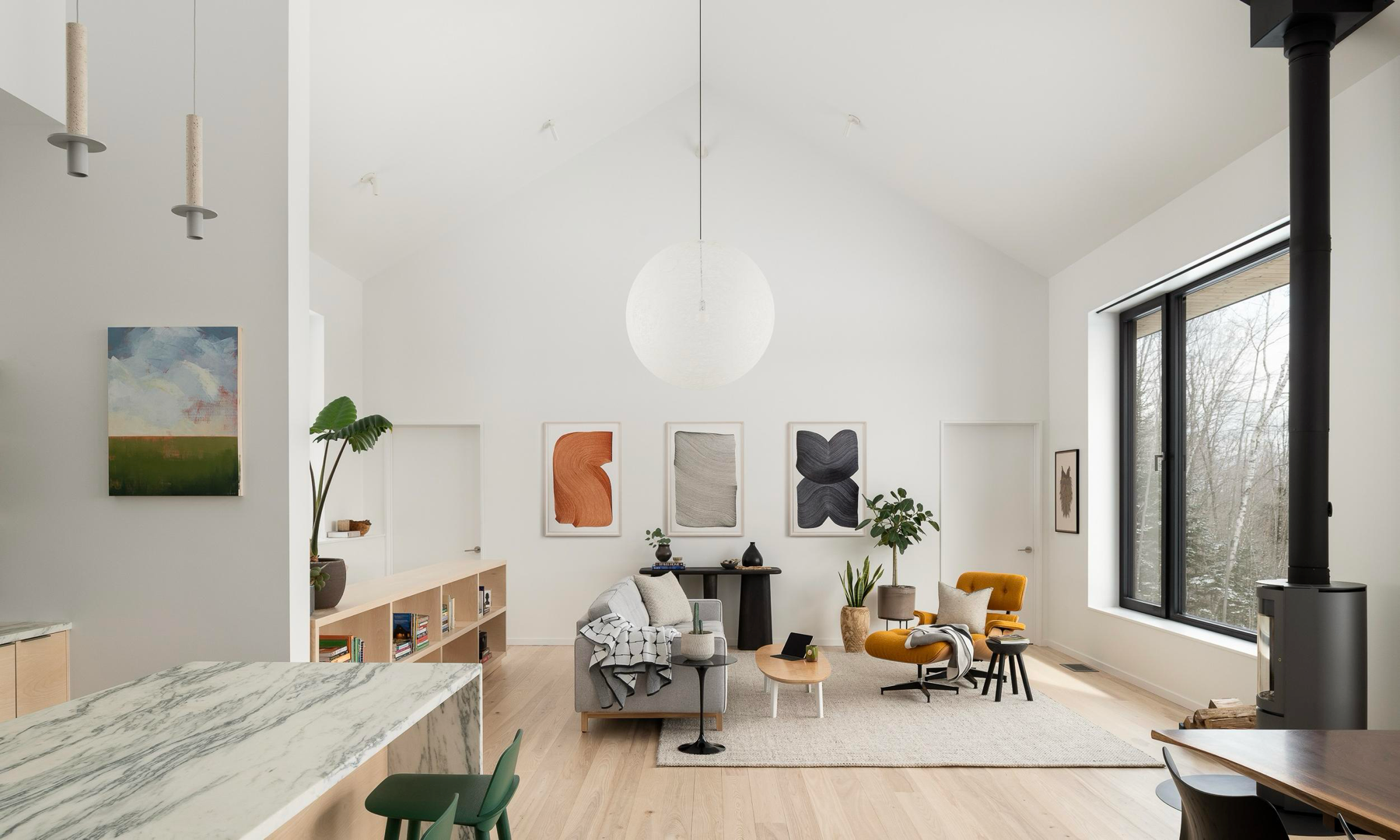
The short answer: a wide plank floor stays stable when four things line up: a stable species and cut, wood dried to the right moisture content, the right installation method for its width, and a home kept at 35–55% relative humidity all year. Humidity is the one that matters most, and the one homeowners control.
Key takeaways
- All wood floors move a little with the seasons. Wider planks show it more.
- Rift & quarter sawn boards move the least; plain sawn moves more.
- Engineered construction moves less than solid, but both work when humidity is controlled.
- Planks 9″ and wider go down with full-spread glue plus nails.
- Humidify in winter and dehumidify in summer to stay at 35–55%.
Why Wide Plank Floors Move
Wood swells when it takes on moisture and shrinks when it dries, mostly across its width. A 12″ board has twice as much wood to move as a 6″ board, so the same change in humidity shows up as a wider gap or more cupping. Typical signs:
- Gaps between boards in winter, when heating dries the air.
- Cupping (edges higher than the center) in humid summers or over a damp crawl space or slab.
- Checking (fine surface cracks) when the air stays very dry for a long time.
Small seasonal gaps that close again in summer are normal for any wood floor.
How Your Climate Affects a Wood Floor
Where you live sets how much moisture your floor will hold and how far it swings through the year. In most of the country, wood indoors settles at about 8% moisture content, moving between roughly 6% and 10%. The dry Southwest averages about 6%, and damp, warm coastal areas about 11% (USDA Forest Service figures via the NWFA).
The biggest swings come where winters are cold. Heating dries indoor air, often below 20% humidity in the Northeast and upper Midwest, then summer brings humid air back. A floor in Vermont goes through more change in a year than one in San Diego, which is why humidity control matters so much in cold-winter states.

Choose a Stable Species and Cut
| Choice | Stability | Notes |
|---|---|---|
| Rift & Quarter Sawn White Oak | Excellent | Vertical grain moves the least across the board |
| White Oak, Red Oak (plain sawn) | Good | Rift & quarter sawn is available for more stability |
| Walnut, Cherry, Ash | Good | |
| Heart Pine, Eastern White Pine | Good | Softwoods; will dent and develop patina with use |
| Hickory, Maple, Birch | Fair | Acclimate carefully and hold humidity steady, or choose engineered |
Solid or Engineered
Engineered planks have a cross-banded plywood core that holds the board flat, so they move the least. That makes them the first choice on concrete, below grade, and for the widest boards in homes with big humidity swings. Solid wide plank is also stable when the species, cut and humidity are right, and it comes wider (up to 15″+ in White Oak). Both are rated for radiant heat. See Solid Hardwood vs. Engineered Flooring.
One exception: very dry air is harder on engineered than on solid. When humidity stays below 35% for weeks, the solid wood wear layer tries to shrink while the plywood core stays put, which can cause checking (fine cracks) in the surface. A solid board just shrinks and opens a seam. So in a home that can’t keep winter humidity above 35%, solid is the safer choice, or plan on a humidifier.
Start With Properly Dried Wood
Flooring should arrive at a moisture content close to what it will settle at in your home. Ours ships kiln-dried to 6–9%. Before installation, your installer measures the flooring and the subfloor: if they’re within 2% of each other, installation can start right away. Read more in Acclimating Hardwood Flooring.
Install for the Width
Follow the NWFA guidelines, which call for adhesive on wide plank floors:
- 4″–8″ wide: nails or staples every 6″–8″ with a bead of adhesive on each plank.
- 9″ and wider: full-spread adhesive with nail assist.
- Engineered on concrete: full-spread adhesive, no nails. See Wide Plank Flooring on Concrete Slabs.
Details and recommended adhesives are in our Installation & Adhesive Guidelines (PDF). Vermont Plank Flooring makes and supplies the flooring; installation is done by your installer.
Keep Humidity at 35–55% All Year
| Season | What happens | What to do |
|---|---|---|
| Winter (heat on) | Indoor humidity can fall below 20%; boards shrink and gaps open | Run a whole-house or room humidifier all season |
| Spring and fall | Humidity swings day to day | Watch a hygrometer; adjust as needed |
| Summer | Humid air; boards swell, edges can cup | Run air conditioning or a dehumidifier |
An inexpensive hygrometer in the main room tells you where you stand. The 35–55% range is also a condition of our warranty. If you have radiant heat, see Wide Plank Flooring Over Radiant Heat.
How Vermont Plank Flooring Builds for Stability
We make every floor at our mill in Brattleboro, Vermont, from rough lumber we choose and rip to width ourselves. Our partner sawmills kiln-dry the lumber, and our own dry kiln conditions it further when needed, so it ships at 6–9%. Every plank is milled to a 3/1000″ tolerance for tight seams. Questions about your home? Call (802) 441-0981.
Frequently Asked Questions
What humidity should I keep for hardwood floors?
35–55% relative humidity, year-round.
Do wide plank floors gap more than narrow ones?
Each board moves more, so gaps can be wider. A stable cut, engineered construction and steady humidity keep them small.
Is engineered flooring more stable than solid?
Yes, the plywood core moves less. Solid is also stable when the species, cut and humidity are right, and it handles very dry winters better.
Which wood flooring handles humidity changes best?
Rift & Quarter Sawn White Oak in solid, or any engineered plank with a plywood core.
Why is my floor cupping?
Usually too much moisture from below (a damp crawl space or slab) or very humid air. Find and fix the moisture source before doing anything to the floor.