🌳 Vermont Hardwood Flooring Blog · Updated
Wide Plank Flooring Over Radiant Heat
Solid or engineered, which species and cuts, and how to set up the system
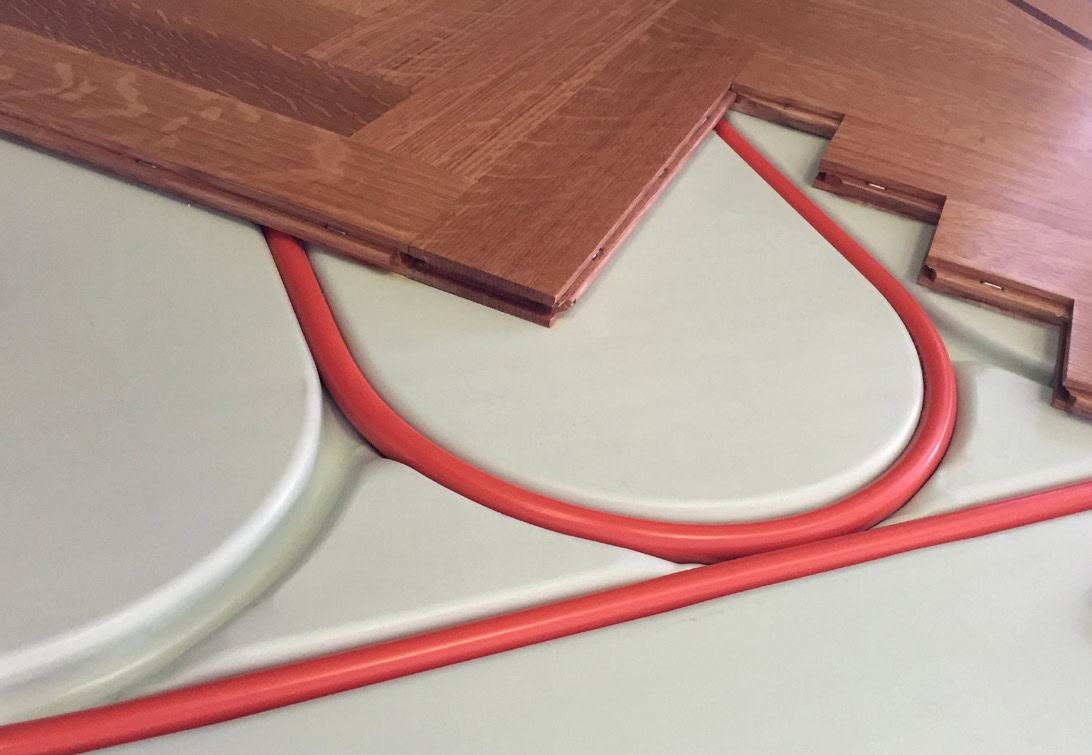
The short answer: both solid and engineered wide plank flooring can go over radiant heat. Engineered is the natural choice for in-slab systems and the widest engineered planks. Solid works well over radiant installed under a wood subfloor, especially in a stable species and cut. Either way, keep the floor surface at 80°F or below and the room at 35–55% humidity.
Key takeaways
- Solid and engineered Vermont Plank Flooring are both rated for radiant heat.
- Rift & Quarter Sawn White Oak and Red Oak are the most stable choices for wide planks over heat.
- NWFA guidelines cap the floor surface at 80°F; a floor sensor helps keep it there.
- Humidity control matters more than the heating system. Radiant floors dry the air in winter.
- Change heat settings gradually, especially in the first season.

How Radiant Heat Affects a Wood Floor
Wood takes on and gives off moisture with the air around it. Radiant heat warms the floor directly and dries the air, so in winter planks shrink and seams can open. When the heat goes off in spring, the wood takes moisture back and swells. The goal is to keep those swings small.
Solid or Engineered Over Radiant Heat
| Engineered | Solid | |
|---|---|---|
| Radiant rated | Yes | Yes |
| Radiant in a concrete slab | Glue directly to the slab | Needs a plywood subfloor over the slab |
| Radiant under a wood subfloor | Yes | Yes |
| Widths | Up to 12″ | Up to 15″+ in White Oak, 19″ in Eastern White Pine |
| Movement with the seasons | Least; the plywood core holds the plank flat | More; choose a stable species and cut, and control humidity |
| Refinishing | Multiple times (approx. 5.2 mm sawn wear layer) | Multiple times |
Engineered and solid Vermont Plank floors share the same species, grades, finishes and 3/4″ thickness, so once installed they look the same. See Solid Hardwood vs. Engineered Flooring for more.

Best Species and Cuts for Radiant Heat
Some woods move less than others with changes in moisture, and the cut matters as much as the species.
- Most stable: Rift & Quarter Sawn White Oak and Rift & Quarter Sawn Red Oak (see our Red Oak page). Vertical grain moves the least across the width of the board.
- Good: White Oak, Red Oak, Walnut, Cherry, Ash, Heart Pine and Eastern White Pine.
- Use engineered, or take extra care with humidity: Hickory, Maple and Birch, which move more with the seasons.
Setting Up Radiant Heat for a Wood Floor
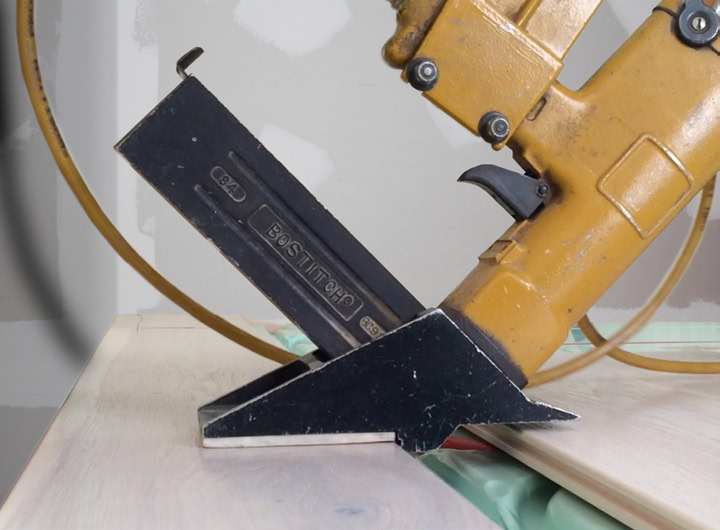
Work through these with your installer and heating contractor, and follow the NWFA guidelines and your heating system maker’s instructions:
- Run the system before the flooring arrives so the slab or subfloor is dry and the house is at normal living conditions.
- Check moisture in the slab or subfloor and in the flooring. Our floors ship kiln-dried to 6–9% moisture content.
- Keep the floor surface at 80°F or below. A floor-temperature sensor on the thermostat makes this automatic.
- Change temperature gradually, a few degrees at a time, rather than switching the system fully on or off.
- Humidify in winter to stay within 35–55% relative humidity. In New England, heated homes often drop below 20% without it.
Installation details by plank width are in our Installation & Adhesive Guidelines (PDF). Vermont Plank Flooring makes and supplies the flooring; installation is done by your installer.
How Vermont Plank Flooring Builds Floors for Radiant Heat
We mill every floor in Brattleboro, Vermont, starting from rough lumber we choose and rip to width ourselves. Our floors ship at 6–9% moisture content and are milled to a 3/1000″ tolerance, so they go down tight and stay that way. Solid starts at $10 per square foot and engineered at $12, unfinished. Request samples or call (802) 441-0981.
Frequently Asked Questions
Can solid hardwood go over radiant heat?
Yes. Our solid flooring is rated for radiant heat over a wood subfloor. Over a heated slab, use engineered or add a plywood subfloor.
What is the best wood flooring for radiant heat?
A stable species and cut, like Rift & Quarter Sawn White Oak or Rift & Quarter Sawn Red Oak, in either solid or engineered. Engineered moves the least.
How hot can a wood floor get with radiant heat?
NWFA guidelines limit the floor surface to 80°F. Some manufacturers set a lower limit.
Do wide planks work over radiant heat?
Yes. Wider boards move more, so stable species, rift & quarter sawn cuts, engineered construction and humidity control matter more as width goes up.
Will my floor gap in winter?
Some seasonal gapping is normal with any wood floor. Keeping humidity at 35–55% keeps it small, and it’s a condition of our warranty.